
Finding Relief from Tennis Elbow: A Patient’s Journey
Tennis elbow is a common condition that affects more than just athletes. Many people develop it through everyday activities involving repeated twisting, gripping, or lifting. Over time, these movements can strain the tendons around the elbow, making routine tasks uncomfortable and, if left untreated, the pain may even begin to spread beyond the elbow.
At LEPR, we often meet patients who are unsure why they’re experiencing persistent elbow pain. One such case was Mr. Umar, who came to us with discomfort that started around his elbow and extended up towards his neck. His experience is a reminder that identifying the real cause of pain is just as important as treating it.
Understanding the Cause
Despite its name, tennis elbow isn’t limited to tennis players. It commonly develops because of repetitive movements that put continuous stress on the tendons attached to the outside of the elbow.
Simple activities such as lifting a heavy dumbbell incorrectly, repeated twisting motions, carrying heavy objects, or performing tasks that involve constant forearm rotation can gradually lead to the condition. Since the damage builds up over time, many people don’t remember a specific injury that caused the pain. This is why the condition often catches people by surprise, especially when the discomfort starts interfering with work, exercise, or even simple daily tasks like lifting a cup or opening a door.
That was exactly the case with Mr. Umar. He wasn’t sure how the problem had started, but the discomfort had gradually become severe enough to affect his daily routine. Like many patients, he initially assumed the pain would go away on its own, but as the symptoms continued, seeking professional assessment became the right decision.
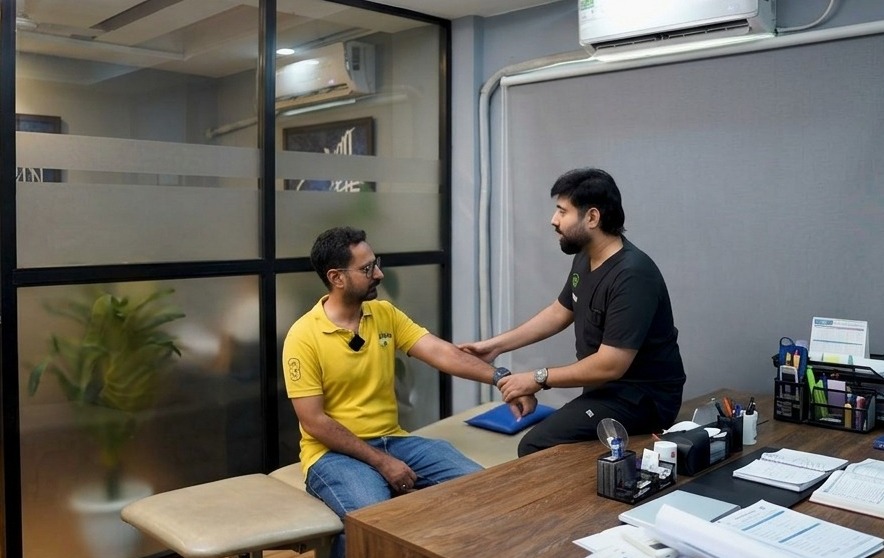
That was exactly the case with Mr. Umar. He wasn’t sure how the problem had started, but the discomfort had gradually become severe enough to affect his daily routine. Like many patients, he initially assumed the pain would go away on its own, but as the symptoms continued, seeking professional assessment became the right decision.
Looking Beyond the Pain
One of the reasons tennis elbow can be difficult to recognize is that the pain doesn’t always stay around the elbow. In some cases, it can travel towards the forearm, shoulder, or even the neck, making patients believe the problem lies elsewhere.
When Mr. Umar visited LEPR, our first step was to carry out a detailed physical assessment. Instead of focusing only on where the pain was felt, we assessed his movement, joints, and surrounding muscles to identify the actual source of the problem.
A thorough assessment helps ensure that treatment addresses the root cause rather than simply providing temporary pain relief. Understanding how the pain developed also allows us to recommend lifestyle adjustments that support recovery and reduce the chances of the condition returning.
A Personalized Treatment Plan
Once the diagnosis of tennis elbow was made, we created a treatment plan tailored to Mr. Umar’s condition.
His treatment included manual therapy and targeted adjustments designed to reduce pain, improve joint mobility, and relieve tension around the affected area. These hands-on techniques help restore normal movement while allowing irritated tissues to begin healing.
After his first treatment session, Mr. Umar said he was already feeling much better. The pain had eased, and moving his arm felt more comfortable than before.
However, our assessment also showed that there was still mild tenderness around the elbow. This meant the healing process had started, but further rehabilitation would be needed for a complete recovery. As with many tendon-related conditions, steady improvement is often achieved through consistent treatment rather than a single session.
Recovery Takes Time
Like most tendon-related injuries, tennis elbow takes time to heal. While many people notice improvement after their first physiotherapy session, lasting recovery usually requires a series of treatments along with proper care at home.
Patients are also advised to avoid activities that continue to strain the affected tendon, especially repetitive rotational movements or lifting heavy weights incorrectly. Giving the tissues time to recover while following the recommended rehabilitation plan helps achieve better long-term results.
Depending on the severity of the condition, recovery may vary from one person to another. Staying consistent with treatment sessions and following professional advice can make a significant difference in restoring strength and preventing the pain from returning. Recovery isn’t about quick fixes; it’s about allowing the body to heal properly with the right guidance and patience.
Why Early Diagnosis Matters
Ignoring chronic elbow pain can worsen the condition over time and cause constant discomfort when doing daily tasks.
Early diagnosis makes it possible to determine the underlying reason before the condition worsens. The proper combination of manual therapy, rehabilitation, and activity adjustments can help lessen symptoms and restore normal movement once the source of pain has been identified.
Even when the pain extends beyond the elbow, Mr. Umar’s recovery shows how timely diagnosis and therapy can make a big difference. Early treatment not only increases the chance of a smoother recovery but also helps avoid chronic tendon irritation, which may later require more complex rehabilitation.
Your Recovery Starts with the Right Care
If you’ve been experiencing persistent elbow pain, tenderness, or discomfort while lifting, gripping, or performing repetitive arm movements, don’t ignore the symptoms. Seeking professional advice early can help prevent the condition from becoming more severe.
At LEPR, we know that every patient is different. That’s why we take the time to understand the source of the pain before recommending treatment. With a thorough assessment, hands-on therapy, and a personalized rehabilitation plan, our goal is to help patients recover safely and return to their daily activities with greater comfort and confidence.
Whether your symptoms have just started or have been affecting you for weeks, the right diagnosis is the first step towards lasting relief.